A helpful offer can come with a question
Someone offers to bring dinner, then asks how the birth went. You want the meal, but you don't want to tell that story today. Those two preferences can sit together. You can accept a practical offer and choose how much of your personal life to share.
Try: ‘Thank you for dinner. I'm keeping the birth details private for now. A drop-off would be lovely.’ You can change the words until they sound like you. The purpose is to make your preference clear, not to produce the perfect reply.
Separate the task from the visit
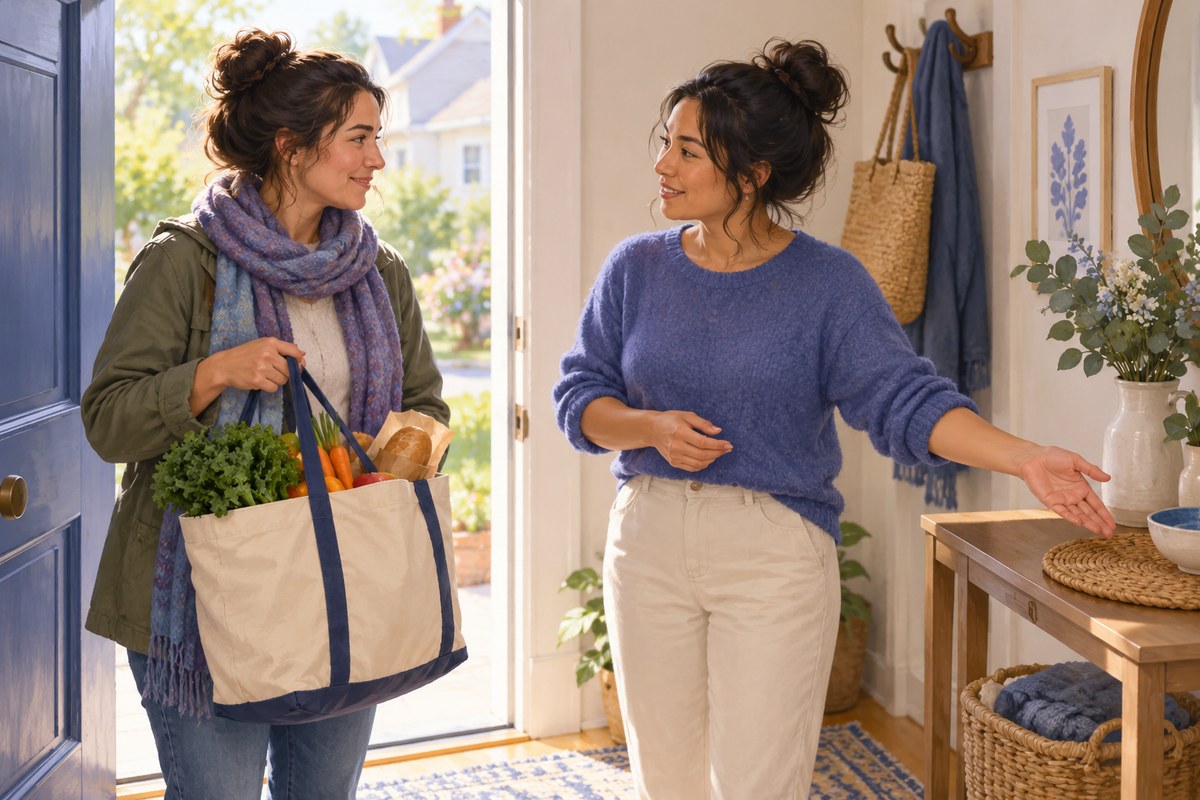
Before a helper arrives, think about what you've agreed to: food at the door, groceries put away or a short visit. A message can name that boundary: ‘Could you leave the bag by the door and text me? I won't be able to host.’ If you want company, say that instead.
For someone helping inside your home, you can keep instructions specific: ‘The clean towels are in this basket. Please leave the bedroom as it is.’ You don't have to open every room or explain every household choice for a person to complete an agreed task.
These are optional ways to describe your preferences. Choose what fits your relationships and circumstances. If you've done this before, the arrangement that worked after a previous birth can be a starting point. You can still choose something different this time.
Say what can be passed along
A helper might want to update other people. You can give them a sentence you're comfortable sharing: ‘You can tell them we appreciated the meal. Please check with me before sharing anything else.’ The same idea can apply to photographs: ‘Please ask before taking or posting photos here.’
If several people are coordinating a task, consider giving them just the information that task needs. A grocery pickup may need a shopping list and meeting place; it doesn't need a detailed health update. Keep personal notes separate from a household message if that's what you prefer.
Keep a route to care
Privacy with visitors can coexist with asking a care provider about a concern. CDC's support guidance encourages listening to concerns and supporting access to medical help. A household helper can respect your boundaries while helping with a ride or an agreed task.
For today, choose one preference you'd like a helper to know. Put it in one sentence, send it to the person involved and leave the rest of the explanation for another time if you wish.
Sources and further reading
Sources checked October 3, 2026 (UTC). This is our review date, not each source’s publication date.